
Yancey County Superior Court
Yancey County is assigned to Superior Court District 35, District Court District 35, and Prosecutorial District 35. The county court system is not a municipal-court model with separate local city case files. North Carolina trial work is divided between Superior Court and District Court, with magistrates functioning within District Court. The Clerk of Superior Court is the central record custodian for both trial-court levels in Yancey County.
Superior Court is the higher trial court. It handles felony criminal cases, civil matters where the amount in controversy is more than $25,000, and appeals from District Court. It also handles will caveat proceedings when the validity of a will is challenged, even though ordinary estate administration is handled by the Clerk of Superior Court acting as probate judge. Superior Court sessions are held in each county at least twice per year.
Yancey County Court Offices
Yancey County does not have multiple numbered Superior Courts at separate addresses. The trial-court, clerk, magistrate, and prosecution contacts all connect back to the courthouse or the District 35 regional structure. The table below uses the official court and office roles documented in the research file rather than inventing numbered courtrooms.
| Court / Office | Type | Address | Phone |
|---|---|---|---|
| Yancey County Superior Court | Felonies, civil over $25,000, District Court appeals | 110 Towne Square, Room 5, Burnsville, NC 28714 | 828-678-5700 |
| Yancey County District Court | Misdemeanors, infractions, family, juvenile, civil under $25,000 | 110 Towne Square, Room 5, Burnsville, NC 28714 | 828-678-5700 |
| Yancey Magistrates | Initial appearances, warrants, bail, small claims, summary ejectment | Yancey County Courthouse / Magistrate's Office | 828-678-5730 |
| Clerk of Superior Court | Records, payments, probate, special proceedings | 110 Towne Square, Room 5, Burnsville, NC 28714 | 828-678-5700 |
| District Attorney, Prosecutorial District 35 | State criminal prosecution | Yancey local courthouse contact / 842 W. King St., Boone, NC 28607 | 828-678-5720 local; 828-268-6610 main |
Superior Court vs District Court
The most useful Yancey County comparison is not Superior Court versus county court or justice court because North Carolina does not use those lower courts for Yancey trial records. The split is between Superior Court, District Court, and magistrate functions. A case may begin with a magistrate, proceed in District Court, and then move to Superior Court if it is a felony or an appeal.
| Topic | Superior Court | District Court | Magistrates |
|---|---|---|---|
| Civil limit | More than $25,000 | Under $25,000 | Small claims and summary ejectment functions |
| Criminal jurisdiction | Felony cases and related proceedings | Misdemeanors, infractions, some preliminary matters | Arrest warrants, search warrants, bail, initial appearances, some minor pleas |
| Family and juvenile | Limited by case type and appeal posture | Family, juvenile, domestic violence protective orders | Initial limited civil and criminal duties |
| Records custodian | Clerk of Superior Court | Clerk of Superior Court | Clerk and magistrate-related court records by case type |
Yancey County Case Flow
A criminal case may begin with an arrest, citation, criminal summons, or warrant. A magistrate may set initial conditions, handle first appearance functions, and issue process. Misdemeanors and infractions proceed in District Court. Felony matters route to Superior Court after the required charging and transfer steps. The resulting court record may show charges, hearings, pleas, motions, verdicts, dispositions, sentences, costs, and probation terms.
Criminal flow: Charge or arrest › Magistrate or first appearance › District Court setting › Superior Court for felony matters › plea or trial › disposition and sentencing › appeal if filed.
A civil matter starts with a complaint or special proceeding filing. Lower-value civil matters and small claims route through District Court or magistrate functions, while larger civil disputes route to Superior Court. Estates and many guardianships are handled by the Clerk of Superior Court, with will caveats moving to a Superior Court judge.
Civil and probate flow: Filing › service › answer or response › mediation or hearing › order or judgment › appeal or enforcement where allowed.
North Carolina's involuntary commitment statute is relevant because District Court and clerk-related mental health proceedings are not ordinary public case files. Yancey County court searches should account for these statutory restrictions.
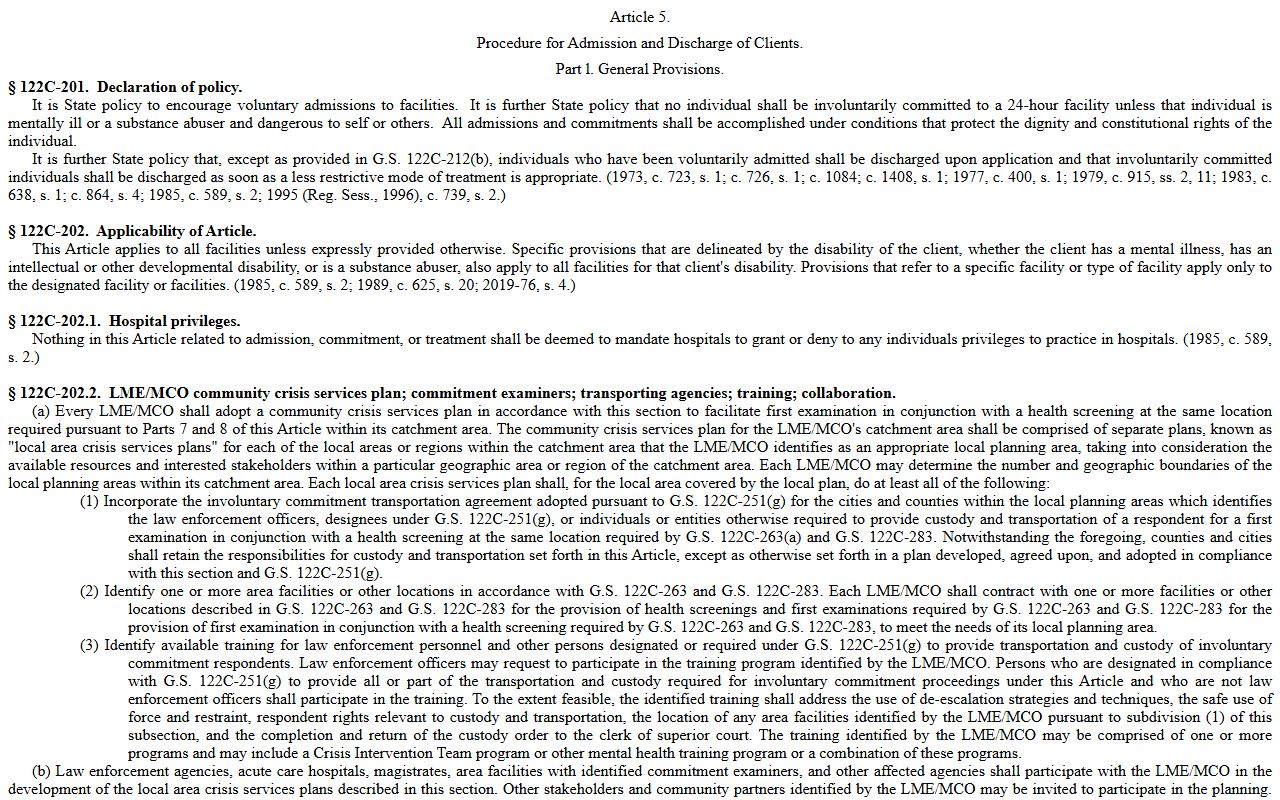
The confidentiality rule shows why a court contact may confirm that a case category exists without making full file details public.
Yancey District Court Matters
District Court handles much of the high-volume local docket in Yancey County. That includes misdemeanors, infractions, juvenile cases, family law, domestic violence protective orders, civil matters under $25,000, and magistrate-linked work. Traffic citations are court records when filed, but they are not handled by a separate Yancey municipal traffic court in the sources reviewed.
District Court records can feed later Superior Court work. A felony arrest or charge may begin with magistrate or District Court activity before moving to Superior Court. An appeal from District Court may also create Superior Court entries. For records access, the important point is that the Clerk of Superior Court keeps both sets of local trial-court records, so the same clerk office is the local counter for many search and copy needs.
District 35 Court Leadership
Yancey County sits in District 35 with Avery, Madison, Mitchell, and Watauga. The research file notes that Chief Justice Paul Newby appointed Rebecca Eggers-Gryder as Chief District Court Judge for District 35 effective January 1, 2025. That appointment is District Court leadership context, not a change to the clerk's role as records custodian or the Superior Court's felony and higher civil jurisdiction.
The Judicial Branch announcement identifies the District 35 appointment and counties served. It gives Yancey County court users a current leadership marker for the regional District Court structure.
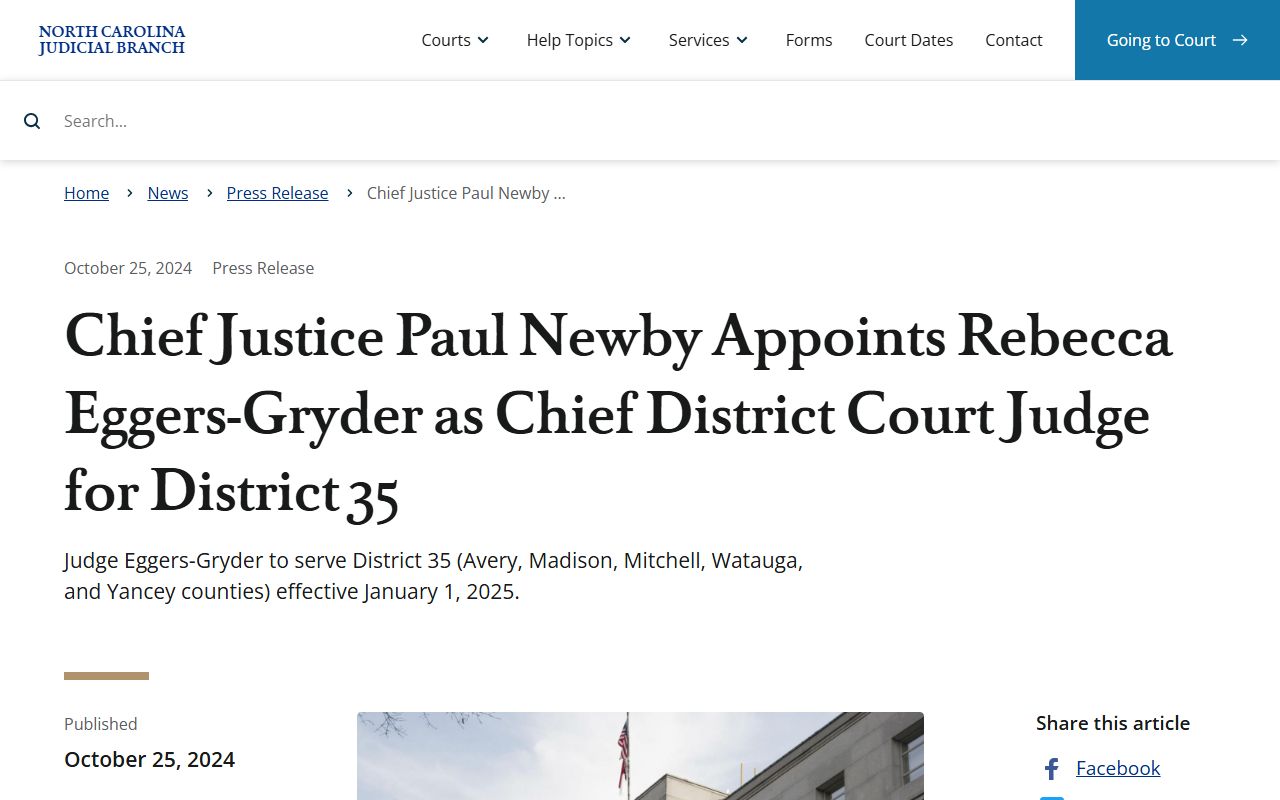
The appointment does not replace local clerk, magistrate, or Superior Court contacts, but it helps explain the regional District Court organization.
Yancey Magistrate Functions
Magistrates are part of District Court. In Yancey County, the magistrate phone listed by NC Courts is 828-678-5730. Magistrates may issue arrest warrants and search warrants, set bail, conduct initial appearances, accept guilty pleas for some minor offenses, and hear small claims and summary ejectment matters. This makes the magistrate office an important contact when a search concerns warrants, bond, initial appearance status, or a low-value civil case.
The local rules page also lists an administrative order about issuance of search warrants by two-way video conference and the Pretrial Release Policy for the 35th Judicial District. Those materials are warrant and bond adjacent. They do not create an online active-warrant list, but they show that magistrate and pretrial processes are part of the local court record path.
Yancey Specialty Court Programs
Yancey County is listed by NC Courts as an operational Adult Treatment Court county in District 35. Adult Treatment Courts are recovery courts for repeat offenders with substance use, mental health, or co-occurring disorders. A criminal case may show treatment-court referrals, review hearings, compliance events, sanctions, graduation, termination, or sentencing consequences.
Other Yancey-linked programs include Clerk Mediation Program, Family Financial Settlement Program, Juvenile Court Improvement Program, Guardian ad Litem, Child Custody and Visitation Mediation Program, District Criminal Court Mediation Program, and Court-Ordered Arbitration. These are not separate public lookup portals, but they can affect docket events and case timing.
Federal Courts for Yancey County
State Superior Court records are separate from federal court records. Yancey County is in the U.S. District Court for the Western District of North Carolina, Asheville Division. Federal civil cases, federal criminal prosecutions, constitutional claims, federal question cases, and diversity cases meeting federal thresholds are searched through PACER/CM-ECF rather than NC eCourts Portal.
The Western District jurisdiction page lists Yancey County in the Asheville Division. That matters when a case is federal rather than a Yancey County Superior Court or District Court matter.
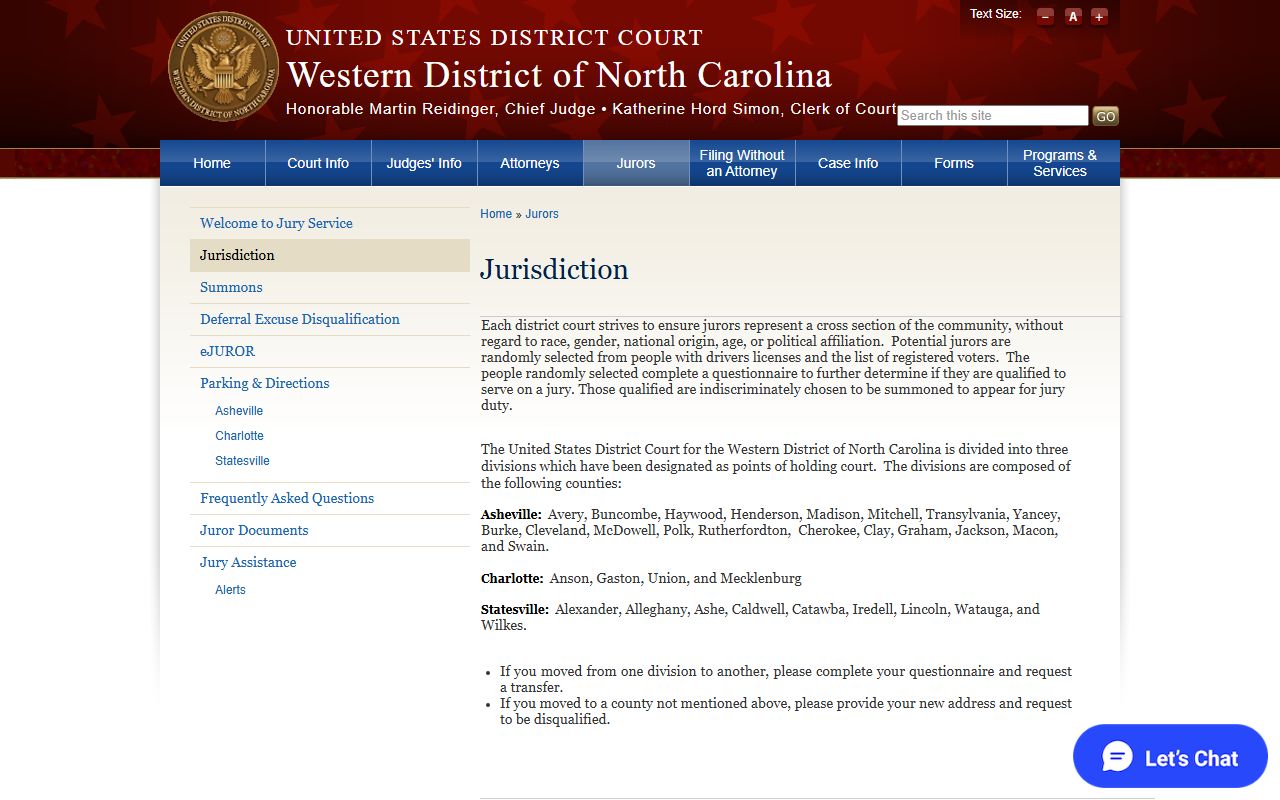
The federal jurisdiction source helps distinguish state courthouse records from federal docket records.
PACER's Western District lookup lists CM/ECF access details for federal case records. PACER is the official federal docket route, unlike the state Portal used for Yancey County trial-court records.
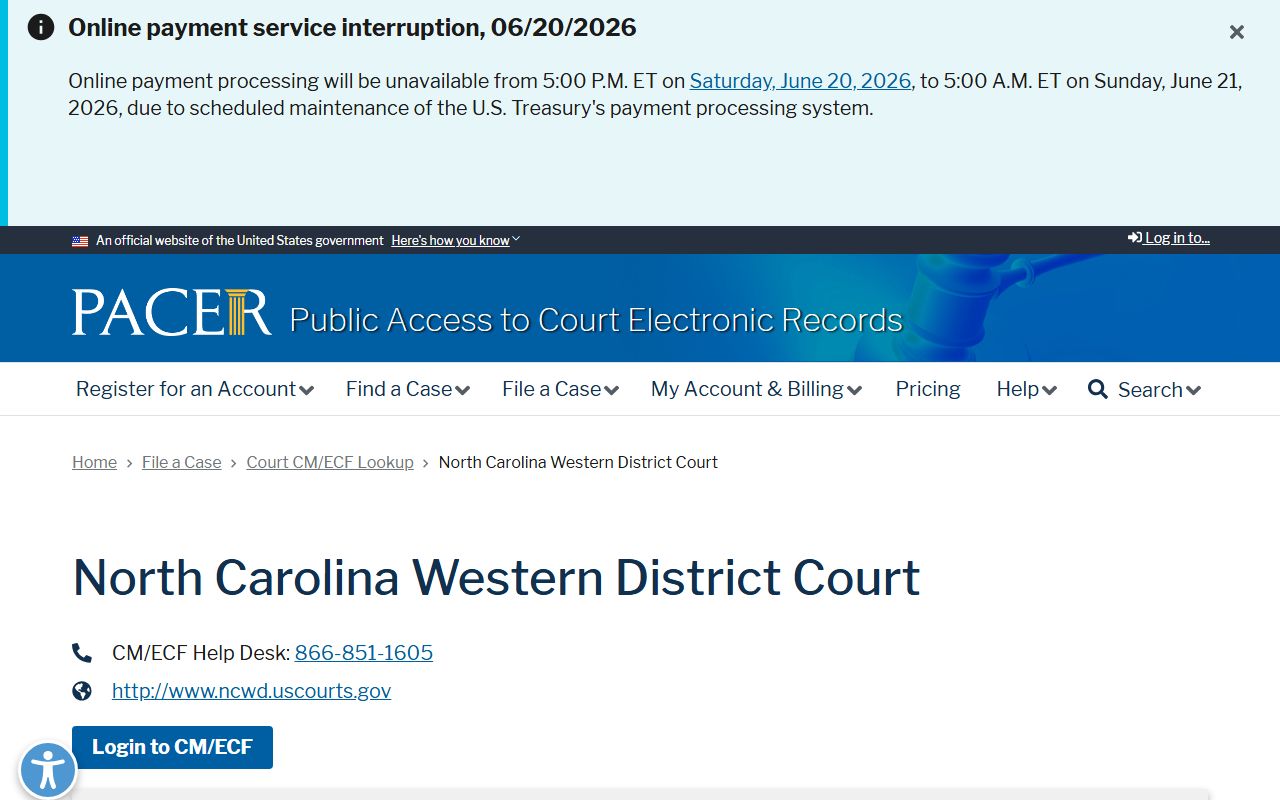
For state cases, return to the Yancey Clerk of Superior Court; for federal cases, use PACER or the federal clerk.
The U.S. Bankruptcy Court for the Western District of North Carolina is the route for bankruptcy matters affecting Yancey County residents or property. Bankruptcy records are federal records and do not appear as Yancey County Superior Court files.
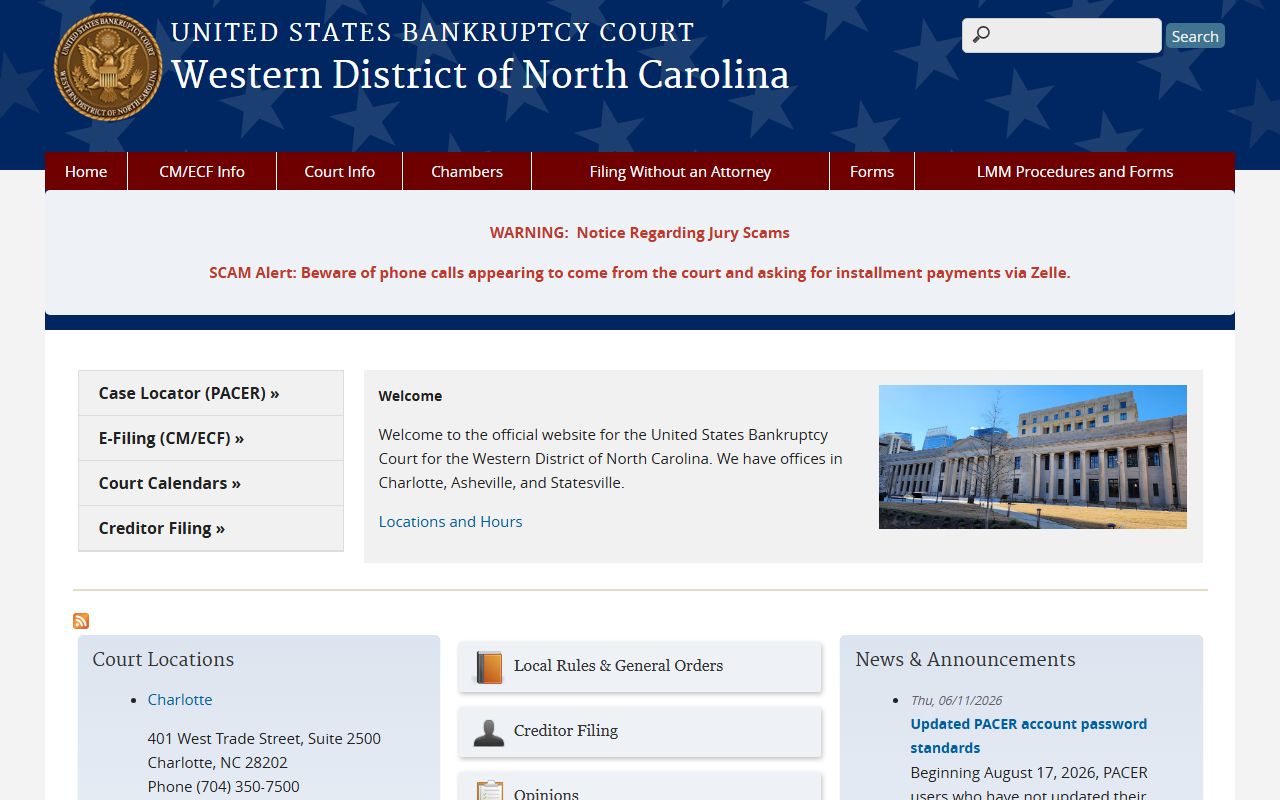
Bankruptcy filings can affect state civil matters, liens, and collections, but the docket is maintained by the federal bankruptcy court.
The U.S. Court of Appeals for the Fourth Circuit hears appeals from the Western District of North Carolina. It is separate from the North Carolina Court of Appeals, which is the state intermediate appellate court.
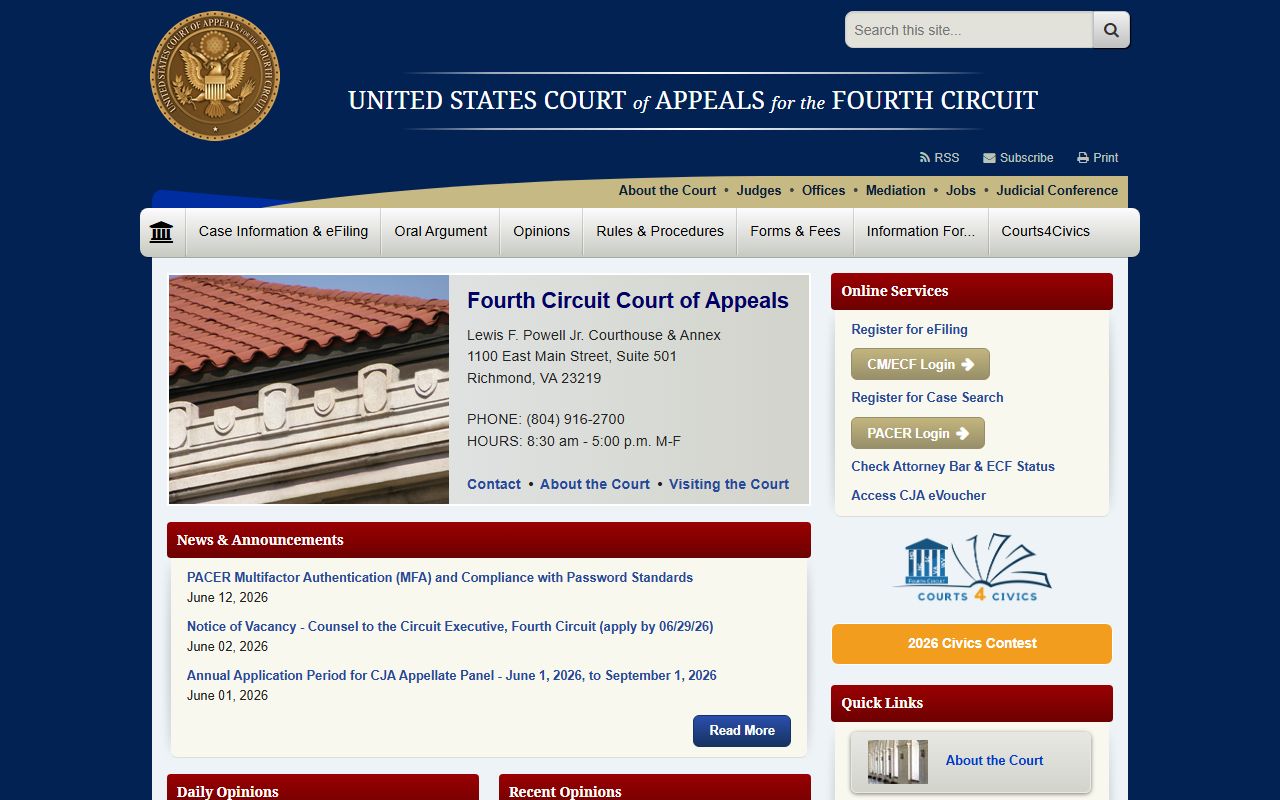
This split keeps state appellate paths and federal appellate paths distinct when reading a court record.
Search Yancey Superior Court Records
Start with the NC eCourts Portal for public case information and Search Hearings for court dates. Use Yancey County as the location filter when narrowing results. For a full paper file, certified copy, or older local record, contact or visit the Clerk of Superior Court in the county where the case was filed. The public terminal route is still important for criminal, civil, estates, and special proceeding searches.
Some records are restricted. Juvenile delinquency, abuse, neglect, dependency, adoption, involuntary commitment, and expunged records are not open like ordinary adult criminal or civil files. A missing online record can mean a portal limitation, a paper-file issue, or a legal restriction. It should not be treated as proof that no matter ever existed.